

In this episode, Kennedy Halvorson of the Alberta Wilderness Association returns to the studio (last appeared in The Future of Water in Southern Alberta) to co-host coal expert, Cornelis Kolijn with me. This conversation aims to break through coal misinformation causing calamity in the Province of Alberta, and beyond. Cornelis graduated from the Delft University of Technology in the Netherlands. He has over 40 years of experience in international mining and metallurgical coal (coke and ironmaking). He’s worked in countries across the globe from Canada to Europe to Australia and all over Asia. He worked for Teck Resources in 2019 and since then has been a consultant for metallurgical coal and coke making, including alternate hydrogen-based direct reduction process and assessing alternatives to blast furnaces. He mentors young engineers and geologists. Thank you to Cornelis and Kennedy for the fabulous conversation!
Resources
The Alberta Energy Regulator’s Statements on Coal Demand
Coal Demand | Alberta Energy Regulator
Battery Circularity and Canada’s Need to Catch Up
Coal Price Volatility, Outlook, Grassy Coal Quality, Rock Waste Piles
AUSTRALIA Resources and Energy Quarterly December 2025
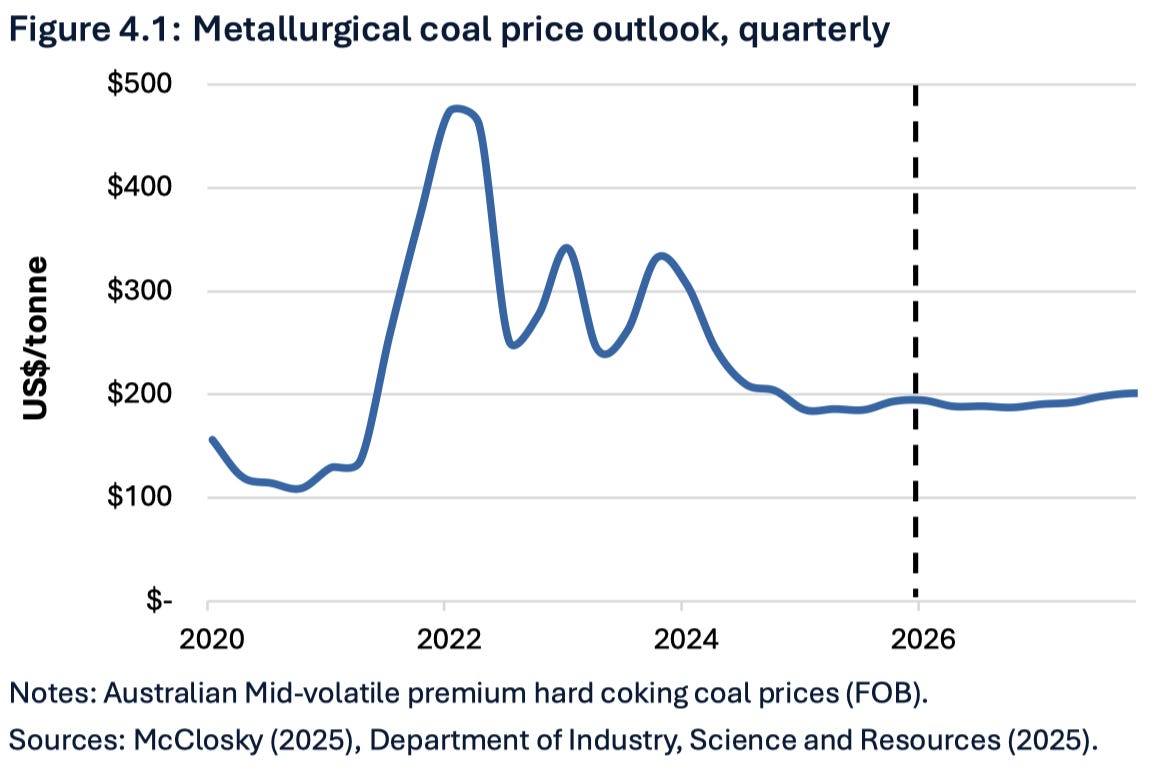
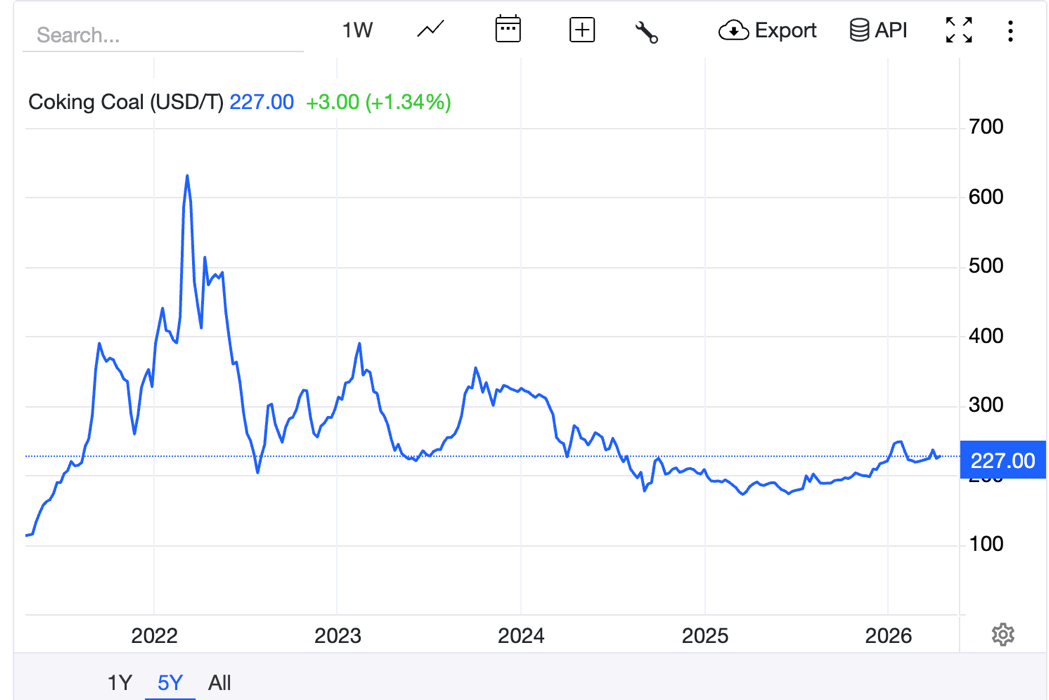
Due to decreasing global coal demand, and an increasing focus on high quality coal, benchmark hard coking coal prices are trending to sub-$200 USD/tonne.
Trading Economics, on April 19, 2026
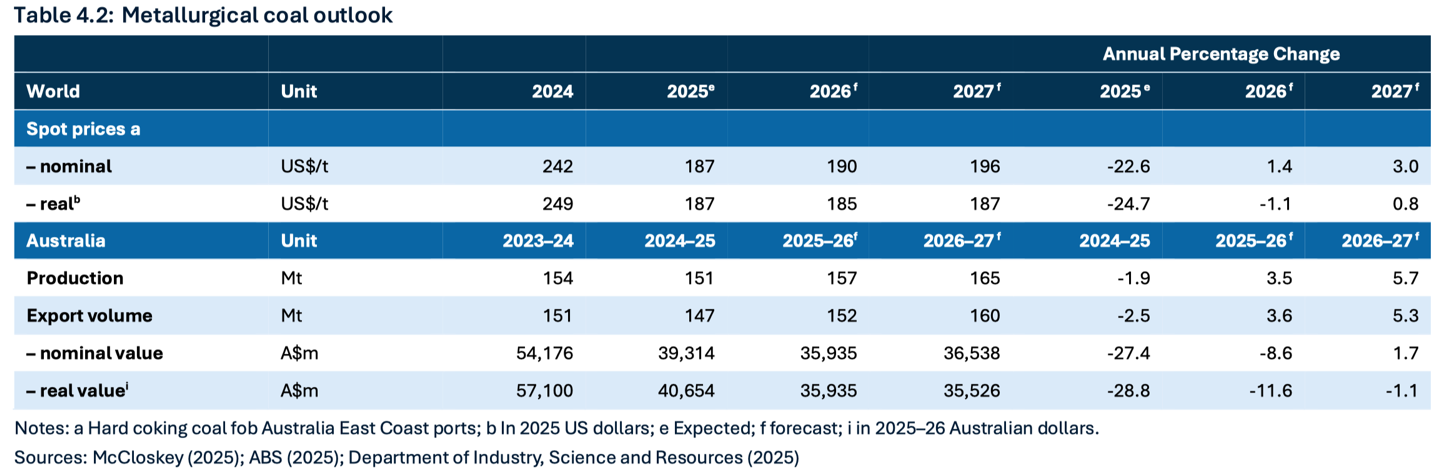
Benchmark metallurgical coal prices are trending to $185 USD/tonne.
Australia Resources and Energy Quarterly, September 2025
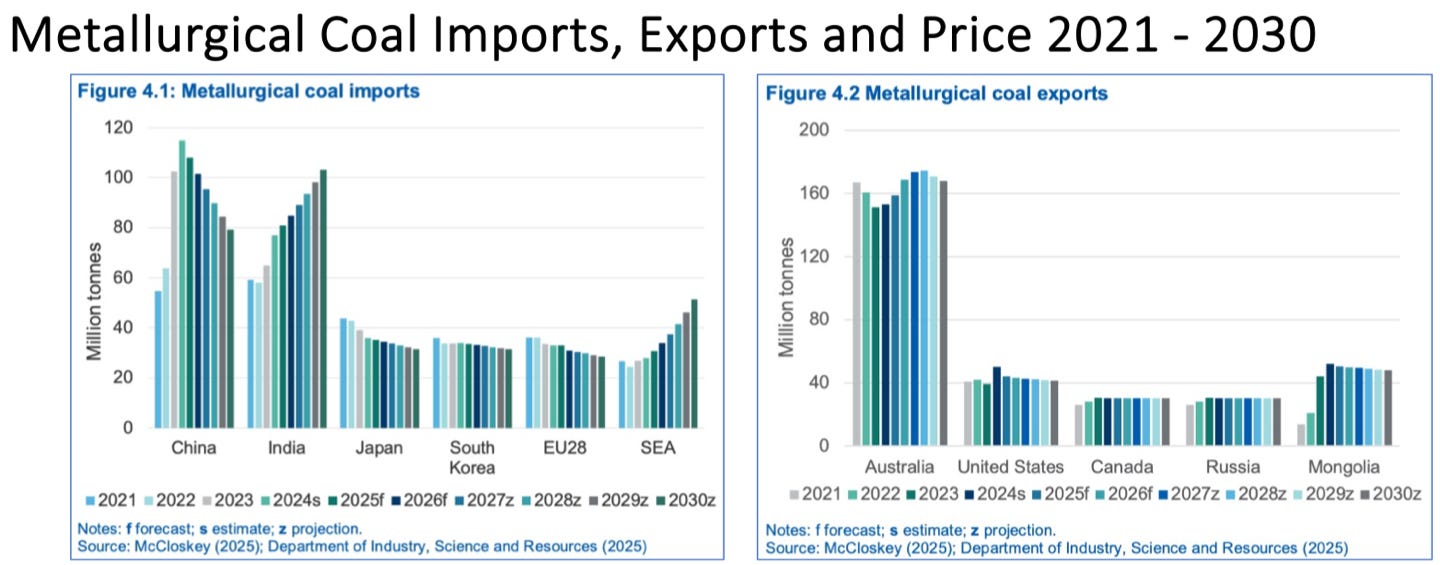
Graphs showing India and South East Asia have been making up for China’s—and others—declining coal imports (left) and Australia’s high quality coal dominates the export market (right).
SMS Group Insights March 2024, The Steel Industry in 2050
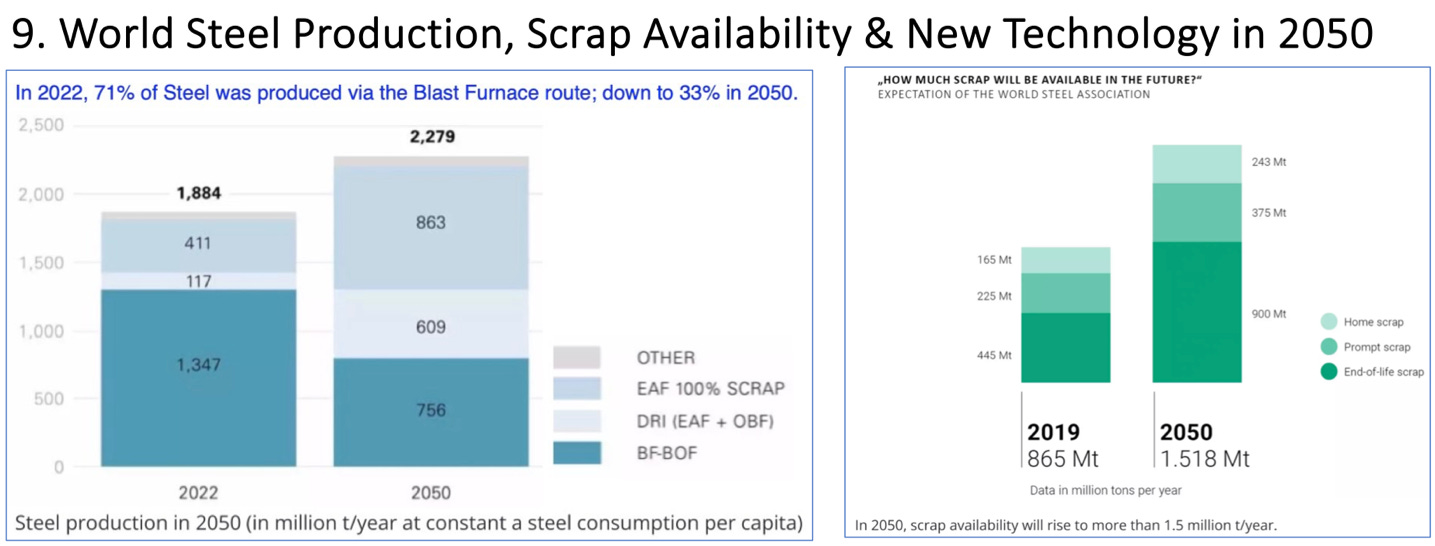
Tables highlighting a 71% to 33% blast furnace decrease expected (left) and increasing scrap steel availability from 0.9 to 1.5 Megatonnes per year (right) between 2022 and 2050.
Wood Mackenzie, Steel Value Briefing Tokyo, August 2024.
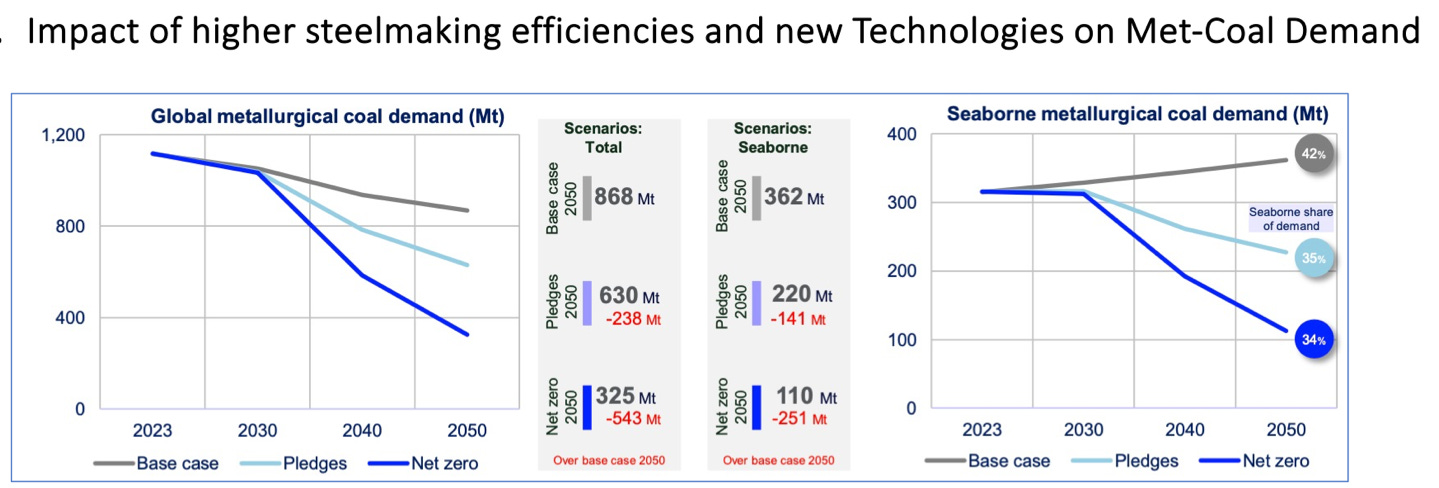
Remembering that good climate policy is good economic policy, scenarios adhering to climate policy may drop global oil demand by as much as 3/4 of current global metallurgical coal demand.
Base Case consistent with 2.5oC global warming, as per Wood Mac’s Long-term of 2024Q1. Steady advancement of current and nascent technologies.
Pledges consistent with 2oC global warming, aligned with Net Zero by 2070 pledges in COP26, in 2021. Incl. policy response to current energy crisis & geopolitical challenges to global economy.
Net Zero 2050 scenario consistent by 1.5oC global warming, net zero by 2050. Aligns with most ambitious goal of Paris Agreement in 2015.
Cornelis’s Expert Evidence Report on Grassy Mountain
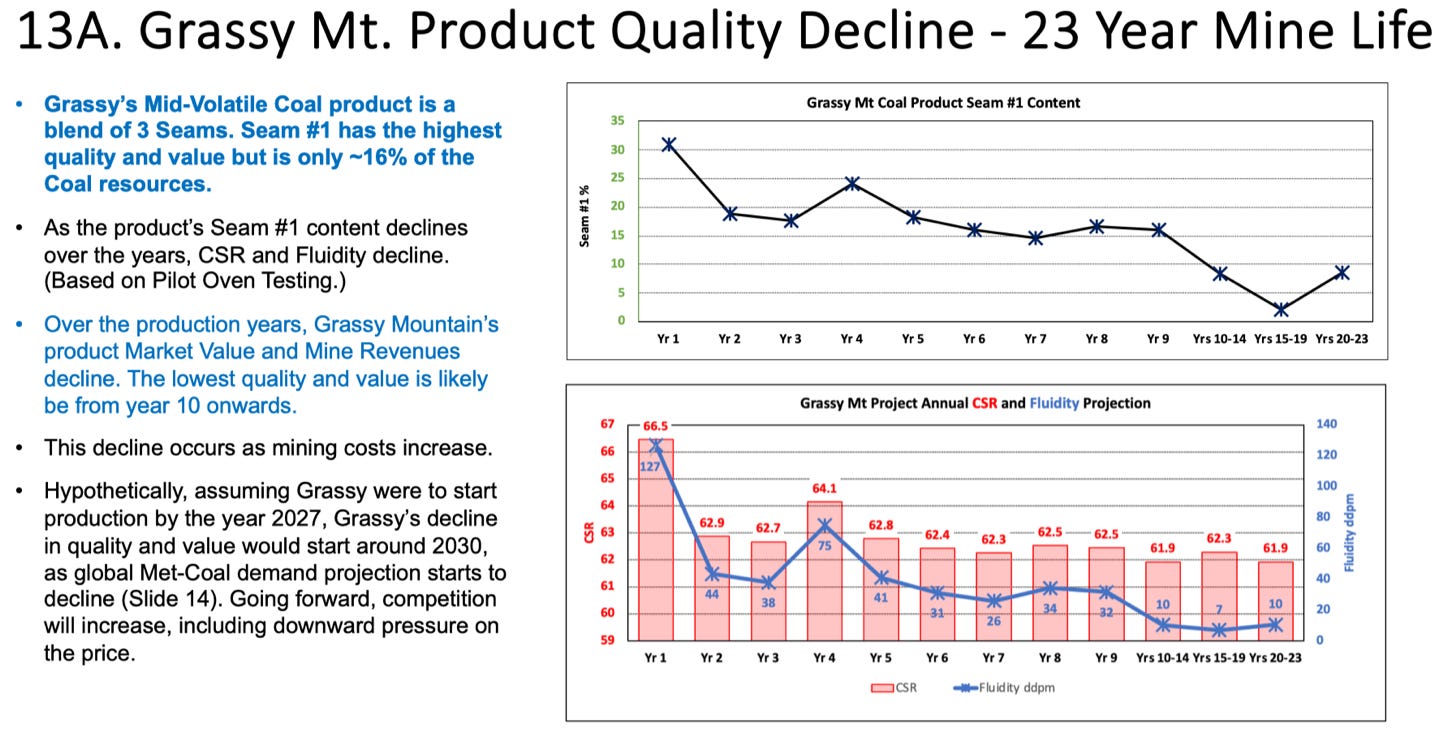
Cornelis expects coal quality to decline rapidly from seam to seam at Grassy Mountain. Coupling this with demand decline, he sees reclamation dollars being unavailable when needed most.
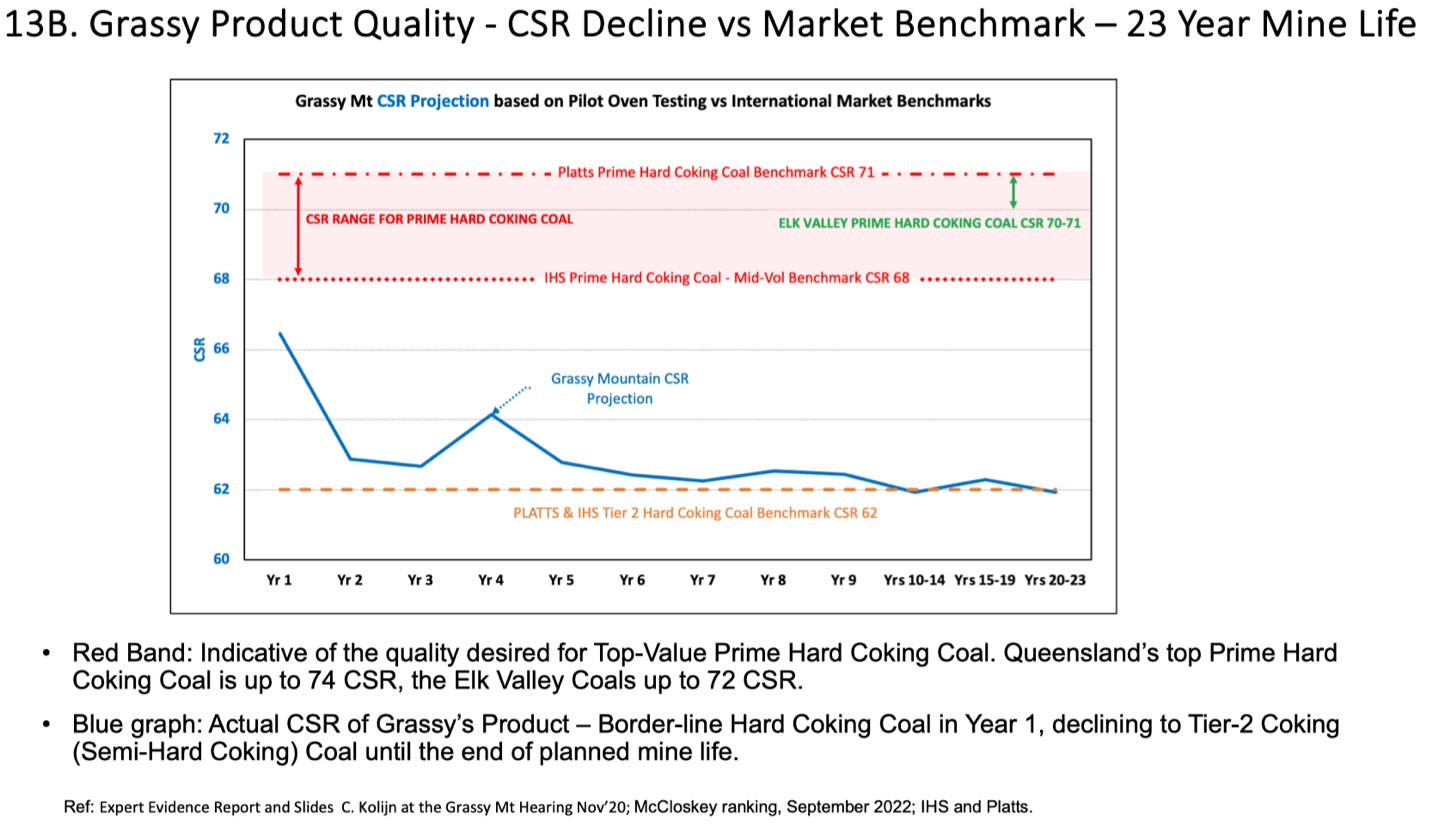
A graph showing the quality of Grassy Mountain Coal being well below Prime Hard Coking Coal quality benchmarks CSR and the neighboring Elk Valley coal seams. As a consequence, Grassy's coal product will have lower market value and pricing compared to the Elk Valley's coal. CSR is the coke strength in the Blast Furnace's process conditions; Extreme Temperatures and aggressive gas-attack degrading the coke, potentially "smothering" the process.
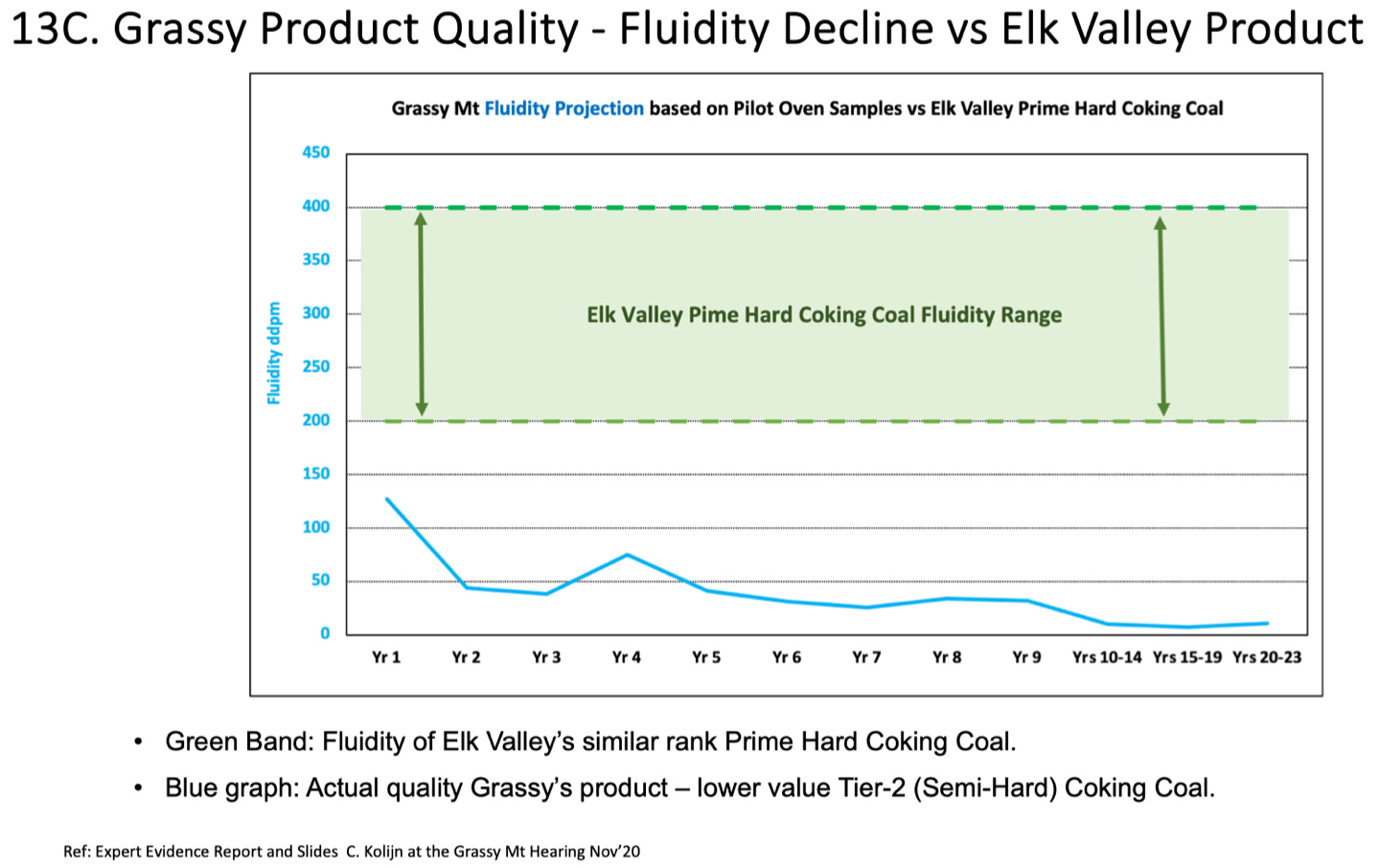
The Fluidity, this is the softening, partly melting of coal during carbonization in the oven is lower than Elk Valley's Prime hard coking coal. Usually, an optimized blend of coking coals is charged into the coke oven and heated to approx. 1100oC. Upon softening and release of gas and tar, the coal solidifies into solid coke. Low Fluidity coals are not as effective interacting with the other coals in the coal blend to form the strong coke structure required in the Blast Furnace.
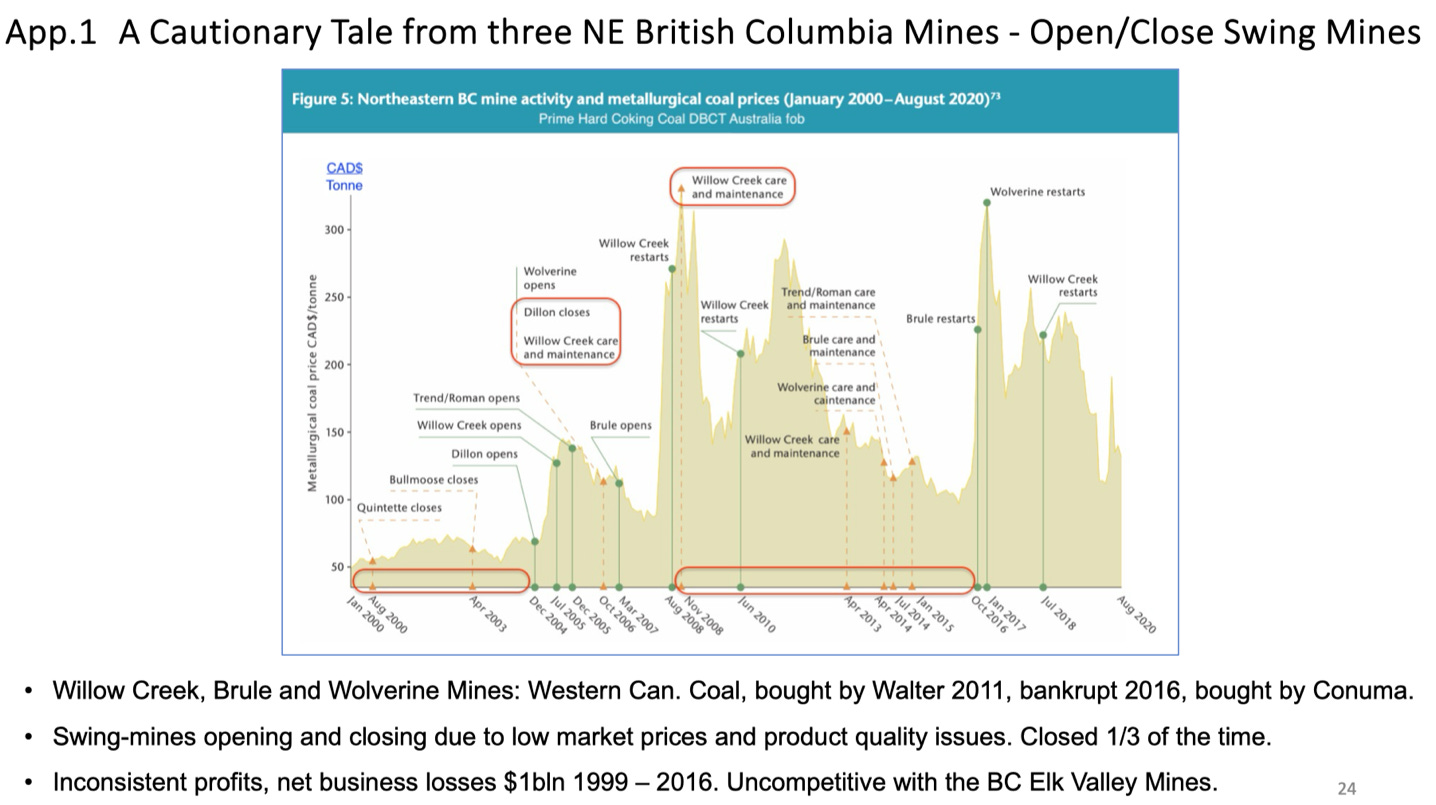
A graph showing the opening and closing of coal mines between 1996 and 2016. Overall mines were offline 1/3 of the time.
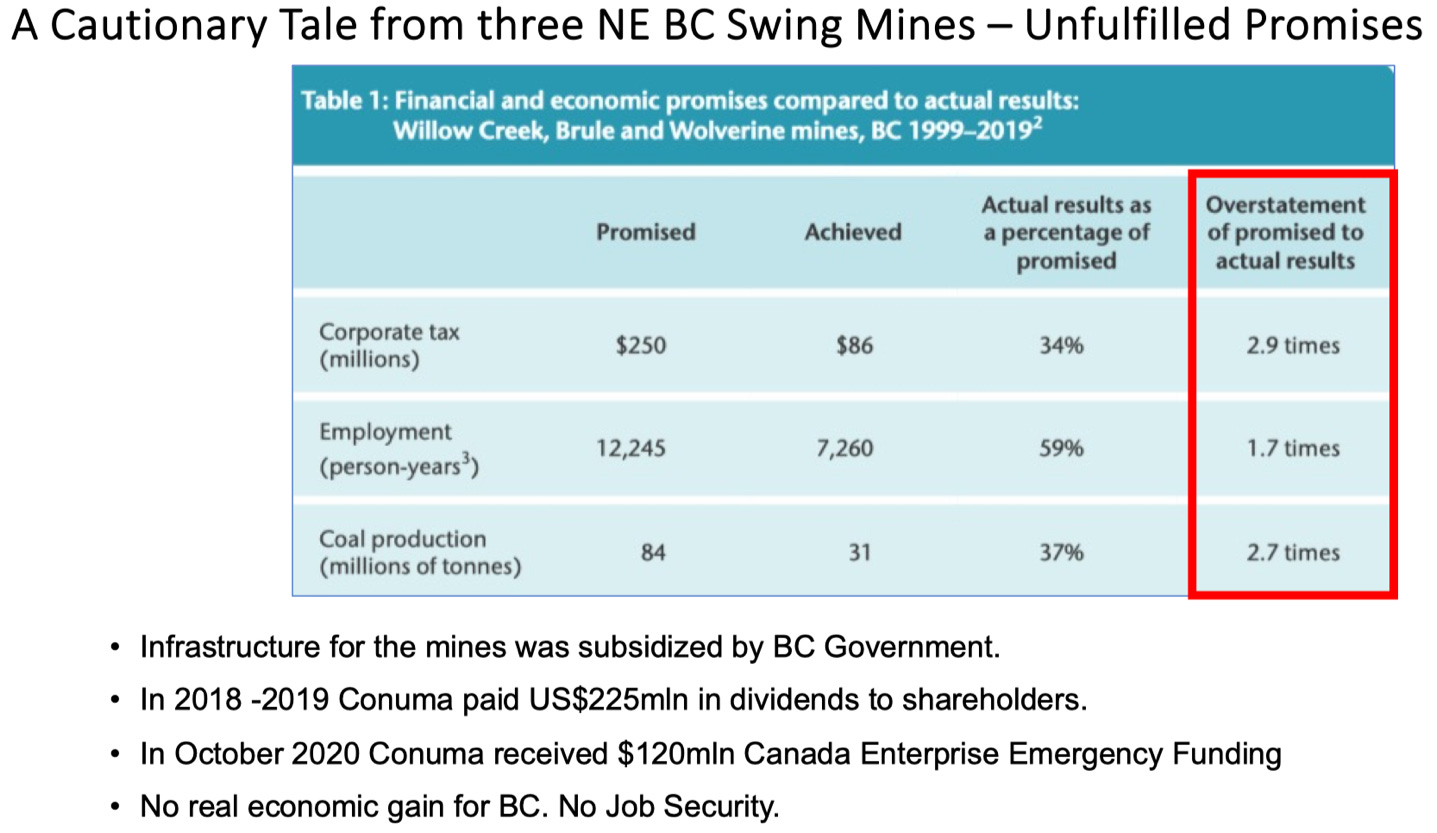
A table highlighting the overstated economic value and employment opportunities across three mines in British Columbia between 1999-2019.
Research on subsidence from underground operations in Alberta and Beyond
Significant movement and ground deformation at the location labelled P4 towards the road and Smoky River: Ground deformation due to natural resource extraction in the Western Canada Sedimentary Basin - ScienceDirect.
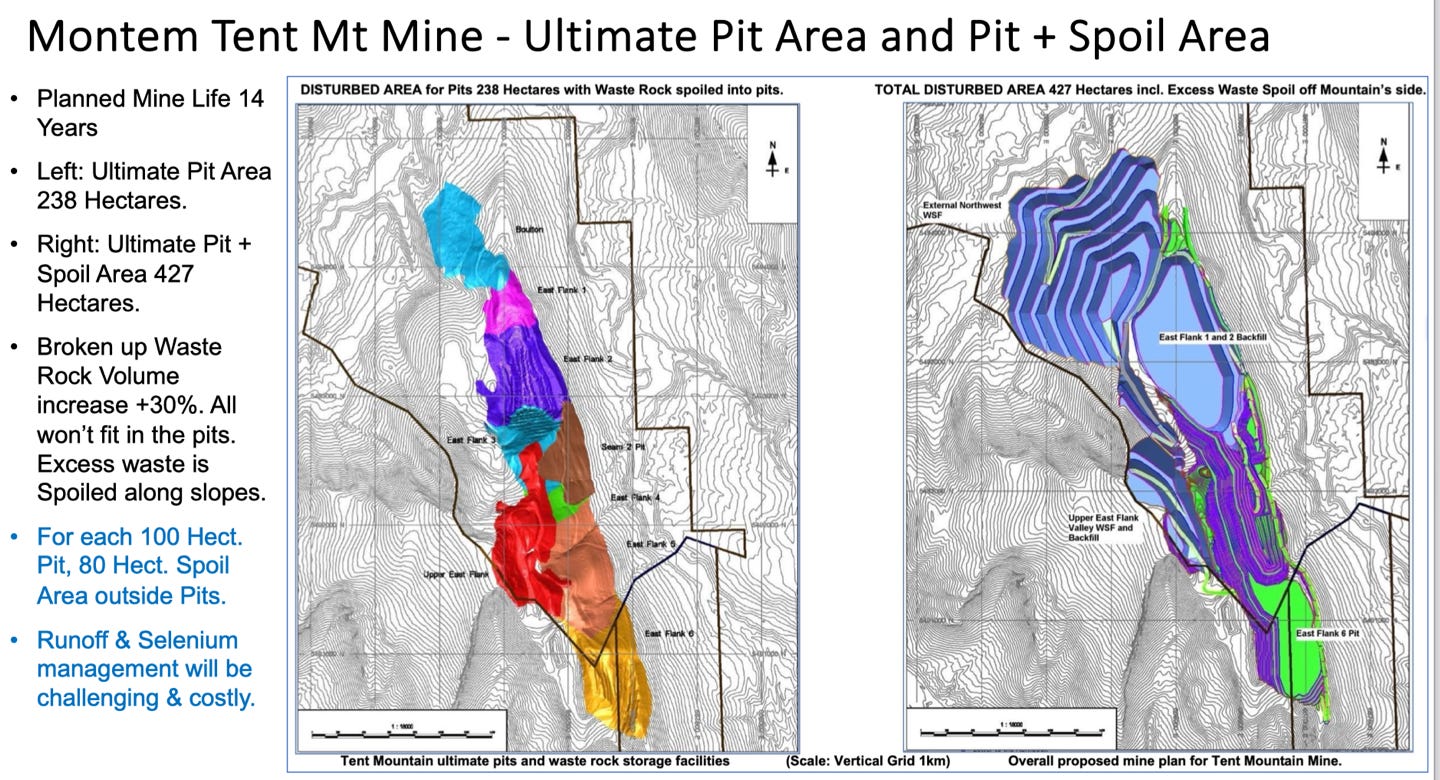
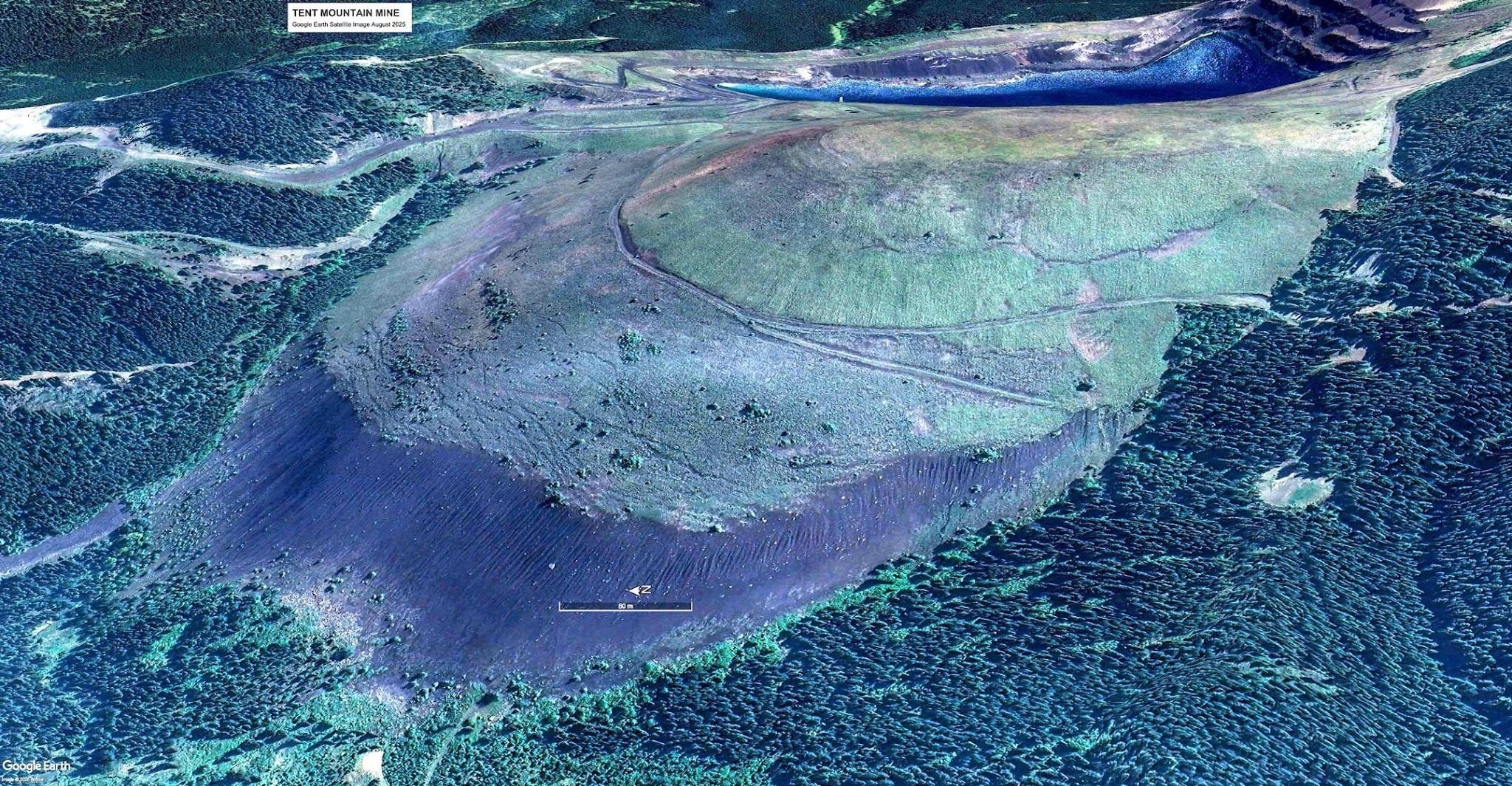
Two maps showing the pits and waste rock (left) and proposed mine plans (right) for the Tent Mountain mine. There is evidence of sluffing of the stock piles due to the topography and increased material volume and load in this Google Earth satellite image.
Tent Mountain Google Earth Satellite Image Slumping Waste Rock Pile 1 Aug.2025-2
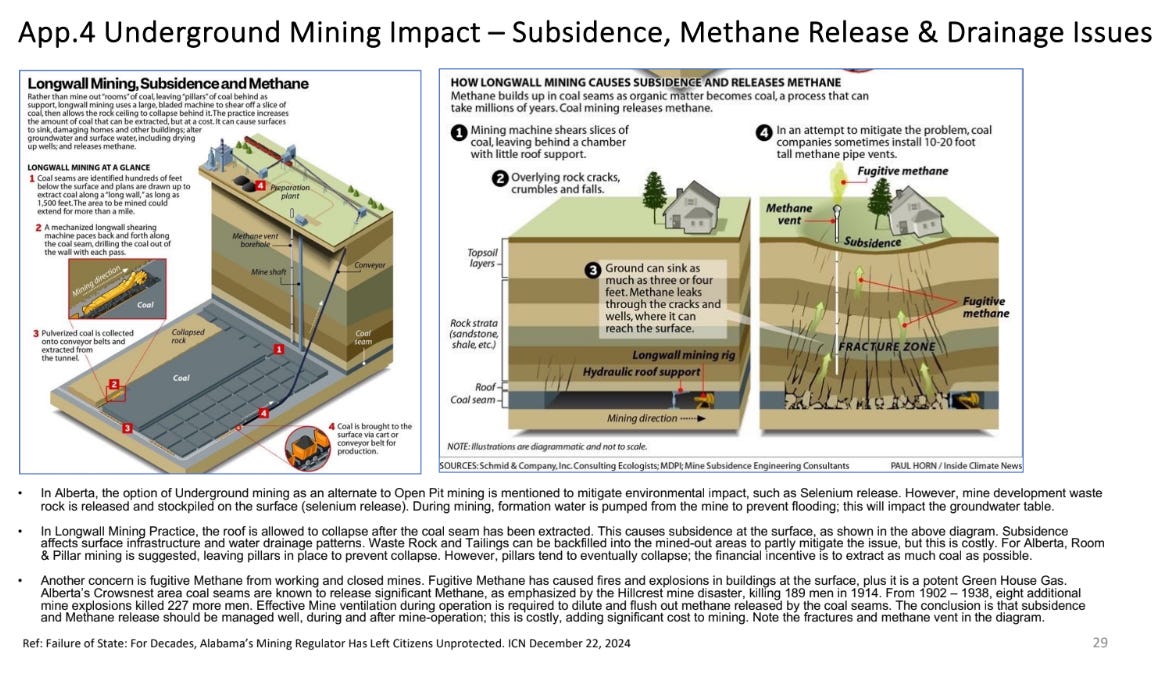
Underground mining is far from “out-of-sight-out-of-mind”. Apart from the impact on the watershed, methane is likely to escape through the cracks into the atmosphere, adding to the atmospheric greenhouse gas pollution. In some mining areas (Appalachians) in the USA escaping methane caused some homes and buildings to explode. In some cases, escaping mine-gas methane is being flared. The Crowsnest coal seams can be very “gaseous”, referring to underground mine explosions of the past.
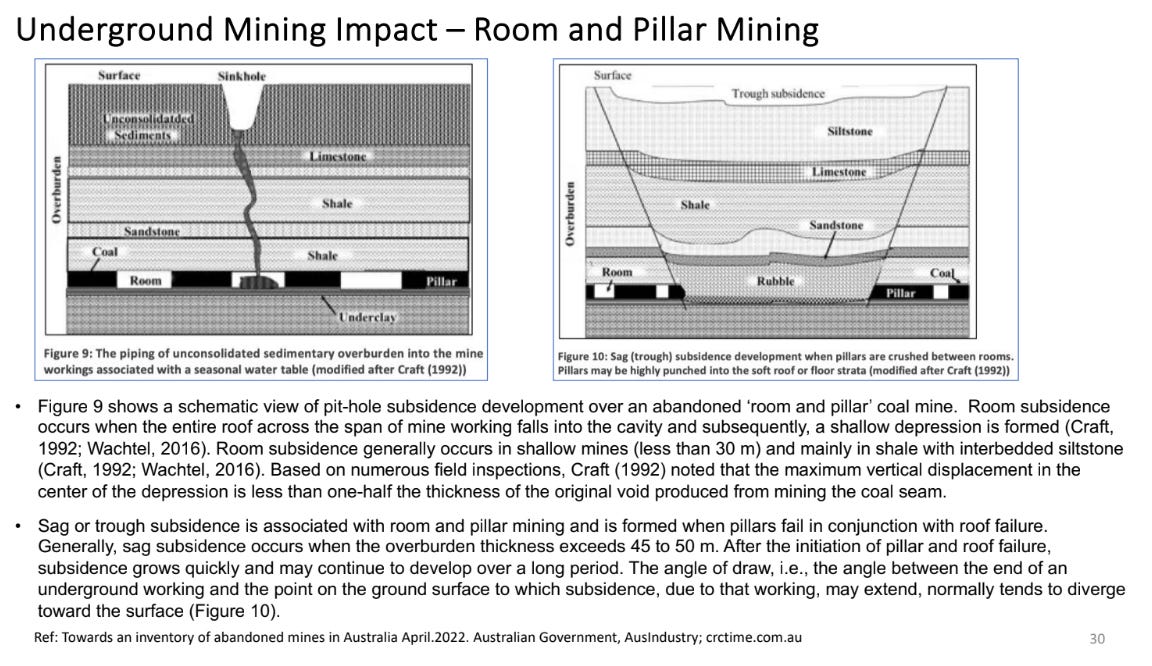
Towards an Inventory of Abandoned Mines in Australia
Southern East Slope Geology Complexity and Thinning Compared to the Elk Valley
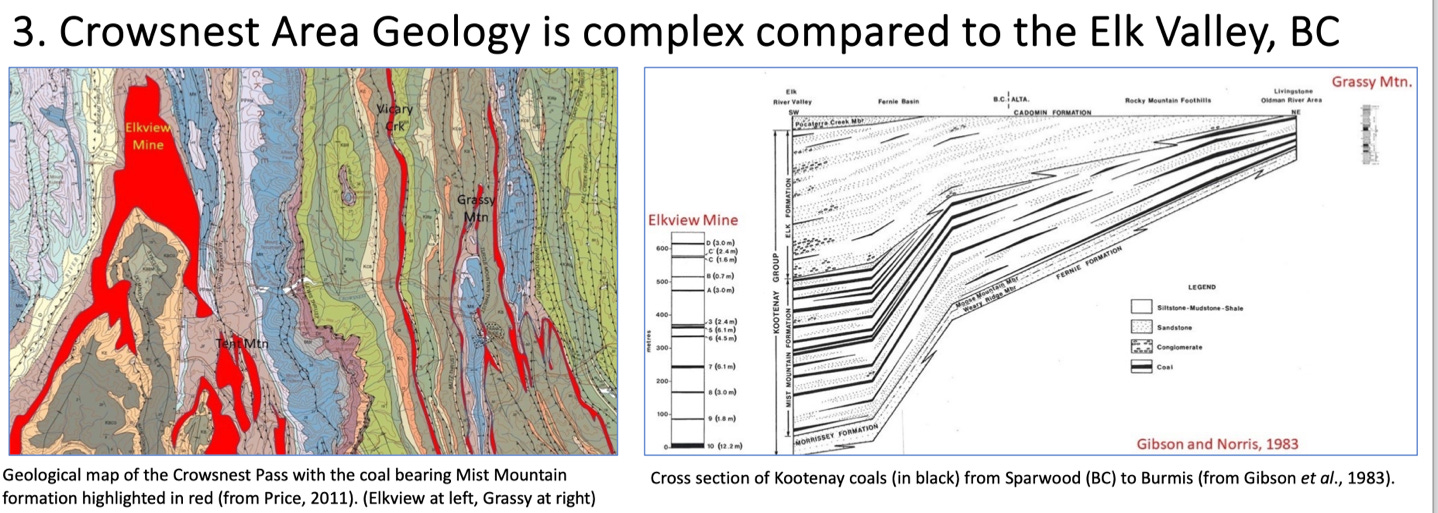
Two maps showing the surface expression increased complexity (left) and thinning of the coal seam thickness (right) from West (Elk Valley) to East (Crowsnest Valley).

The Joint Review Panel Report Decision, Page 19, finds the project is not in the public’s interest: https://static.aer.ca/prd/documents/decisions/2021/2021ABAER010.pdf.
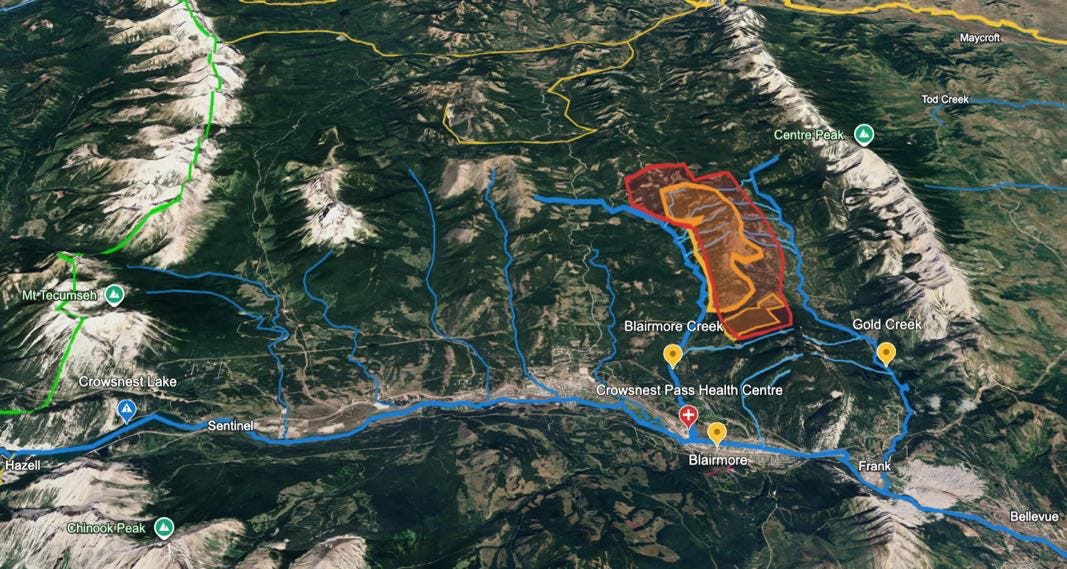
This Google Earth image roughly shows the original rejected mine footprint (red) and the newly proposed footprint (yellow). As you can see, very little has changed. The map also highlights the tributaries that flow into the Crowsnest River, including Gold Creek and Blairmore Creek, highlighting their direct connection to downstream water systems that will receive contaminants.


