

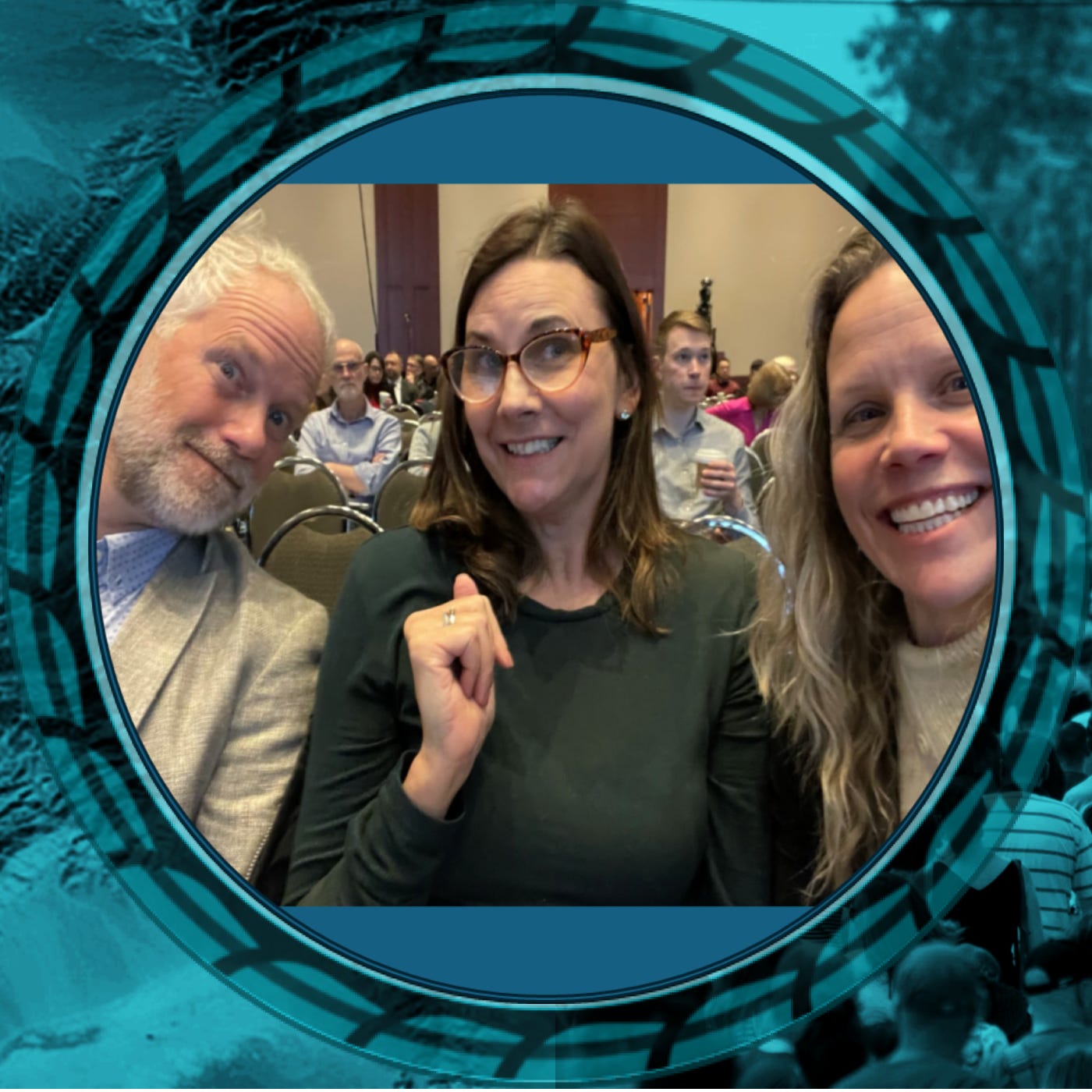
I had the opportunity to step outside of my comfort zone with Claire Kraatz of For Our Kids Alberta and Dr. Joe Vipond of the Canadian Association of Physicians for the Environment (CAPE) on Monday night to hear from the CPP Investments | Investissements RPC board (CPPIB).
I was expecting the room to be hyping a west coast pipeline, fossil fuel expansion, and further military investment. I was pleasantly surprised with the questions from my fellow Calgarians.
Joe led the questions by asking why the CPPIB removed it's net zero commitments. The response was "decarbonization" is good enough. I followed up by reminding Michel Leduc that the oil and gas industry has yet to commit ANY private dollars towards carbon capture and storage (CCS) technology. They haven't accepted the toll rates which are necessary to address the 4x cost increase to the Trans Mountain expansion project. I reminded him that all of the Pathways Alliance members have scrubbed net zero commitments off their websites as they know CCS does not achieve this. Lastly, I reminded him why: because CCS will only reduce 15-20% of emissions and what is required instead is to stop developing new fossil fuels.
My question to him was: what is the CPPIB waiting for before they will stop investing in fossil fuels as the industry is operating in bad faith? I reminded him that I am a professional and member of The Association of Professional Engineers and Geoscientists of Alberta (APEGA) and that I am speaking from a place of public safety and environmental integrity.
Leduc explained that public investment is an important way to influence good practice in the fossil fuel industry. I beg to differ, I worked within for 22 years before I realized there is zero leadership within the fossil fuel industry. Only misleading. I dare them to prove me wrong.
Beyond the questions about further commitment from CPPIB to invest in renewables, a Calgary resident asked about their investment in the Ga7a genocide.
"According to research from Just Peace Advocates, the CPP invested $27 billion in companies complicit in Isra3l’s genocide in Ga7a and apartheid in the W3st Bank." (thanks The Orchard for this figure from Just Peace Advocates in your article). Leduc acknowledged the concern and suggested he would look further into it.
The CPPIB was in Edmonton yesterday, too. Glad to know that the separatists weren't present there either and that Edmonton was also concerned about CPPIB's continued investment in fossil fuels and war.
Claire closed questioning by asking how the CPPIB can justify investment in Tiene Energy and other oil and gas producers who are actively lobbying against Federal emissions reduction regulations. Leduc’s final comments suggest he appreciates things are getting worse and not better, and that it is by the oil and gas industry’s design.
The message is clear, from the province who knows about the industry most, the CPPIB has a responsibility to divest from their position in war and fossil fuels. To maintain this position, when there is zero evidence of good faith, is misleading Canadians into the future. Change is needed, leaders are needed. What the CPPIB does next matters, they have been told from the horse's mouth.
#CPPIB #cdnpoli #abpoli #fossilfuel #divestment
An excellent essay that is not at all unreasonable. Interestingly, CPP is investing assets on behalf of future beneficiaries who will be confronted by the horrendous consequences of climate change. And these consequences will undoubtedly include food insecurity for the very people on whose behalf CPPIB is supposed to be working.
I’d also add that carbon sequestration is not at all a technology proven in Canada. The only long-life site that has operated in a manner consistent with expectations has been the Norwegian Sleipner project, which sequesters carbon underneath the North Sea. The AB Pathways proposal involves sequestering carbon underneath Alberta, which is a geography riddled with over 180,000 we’ll bores. It is hypothetical and may or not operate as hoped.
If I had been there, I would have attempted to say that having had my first career in finance, I do my own retirement investing. There is plenty of work that has been done showing that divesting fossil fuels and reinvesting yields better returns. I did this more than 10 yrs ago. Five years ago, I had my investments reviewed by an investment team to check work. The response was that they could not have done better. One of the main research teams I follow is Corporate Knights. At one of their events, in 2019, Mark Carney attended and said "Companies that ignore climate change will go bankrupt." The challenge to keep Canada together surely factors into his strategies. However, your (CPPIBP) strategy should not change - which is to manage Canada's Pension Plan with an emphasis on security. It is clear that fossil fuel investments are more volatile and face the prospect of becoming stranded assets, not to mention the target of legal action at every level of government, including international. We expect better and urge you to consider who you serve.